Downtown Los Angeles will be one of the most important places to understand before the 2028 Olympic and Paralympic Games. Several major venues sit within the official DTLA Zone, while nearby rail stations connect downtown with other competition areas across Los Angeles County. For residents, business owners and future visitors, the Games are not only a two-week sporting event. They are also accelerating conversations about mobility, public space, hospitality and how people experience the city center.
This guide explains what is currently confirmed, where the main downtown venues are located and how to begin planning a practical DTLA visit. Details may continue to change before 2028, so travelers should always confirm schedules, ticket rules and transportation information through the official LA28 venue plan. For more local planning ideas, explore our Downtown Los Angeles neighborhood guides and DTLA Weekend Guide.
Why Downtown Los Angeles Will Be Central to LA28
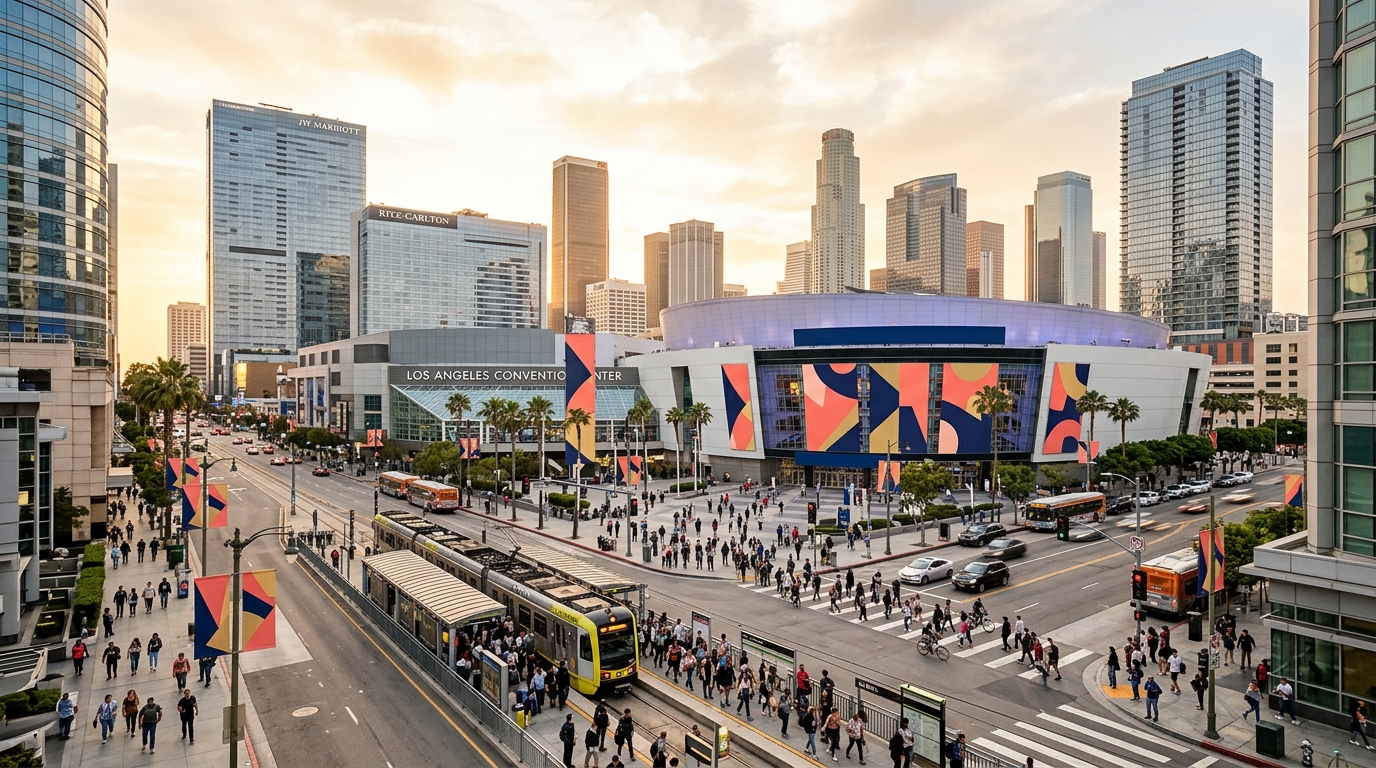
The official LA28 plan groups venues into geographic zones so spectators can understand which events are close together. The DTLA Zone currently includes the downtown arena, three Los Angeles Convention Center halls, Dodger Stadium and Peacock Theater. Exposition Park, which includes the Los Angeles Memorial Coliseum and other venues, is immediately south of downtown and can be reached by Metro.
This concentration matters because visitors may be able to combine an event with a meal, museum visit or neighborhood walk without crossing the entire region. It also means downtown streets, stations, hotels and restaurants are likely to experience heavy demand. Learning the layout early will help visitors avoid unrealistic itineraries and choose accommodation near the events they care about most.
The DTLA Olympic Zone Explained
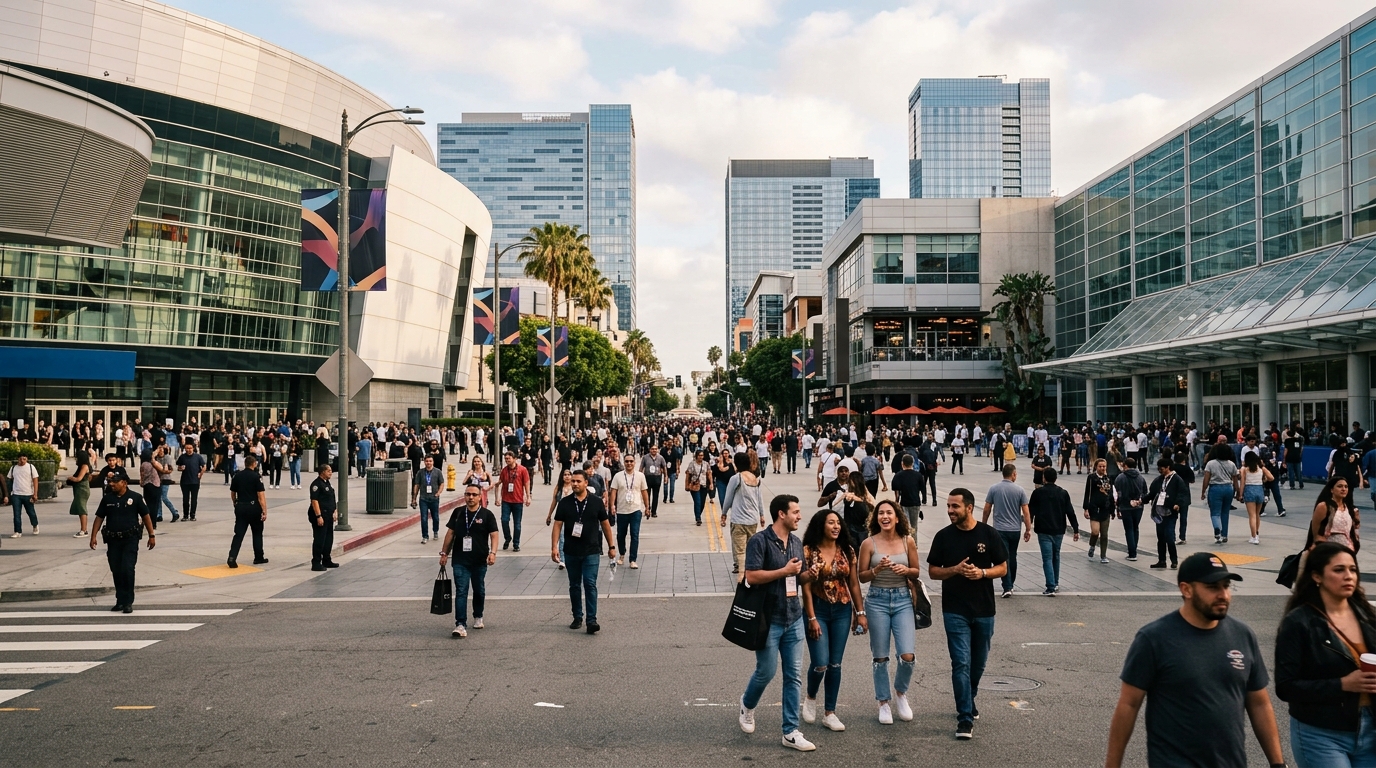
The DTLA Zone covers several distinct parts of downtown rather than one compact complex. The arena, convention center and Peacock Theater are in South Park. Dodger Stadium sits north of the downtown core near Elysian Park. These areas have different transit options, walking conditions and nearby attractions, so the venue name alone does not tell the full story.
DTLA Arena and Peacock Theater
The downtown arena and Peacock Theater are located within the L.A. LIVE entertainment district in South Park. This is one of the easiest parts of downtown for visitors to understand because the arena, theater, convention center, hotels and restaurants are grouped within a few blocks. Pico Station serves the area, while 7th Street/Metro Center is farther north and connects multiple rail lines.
On a busy event day, expect the sidewalks and nearby restaurants to fill quickly. Booking a table close to the venue may sound convenient, but it can also create unnecessary stress if service runs late. A safer plan is to eat earlier or choose a restaurant a few Metro stops away. Our DTLA food and drink guides will help readers compare options in South Park, the Historic Core and nearby neighborhoods.
Los Angeles Convention Center Halls
The Los Angeles Convention Center is scheduled to host multiple Olympic and Paralympic competitions across its halls. Because several events may take place inside the same complex, the convention center could become one of the busiest spectator destinations downtown. Visitors should not assume that arriving at the property entrance means they are close to their assigned hall or seat.
Allow extra time for security, ticket checks and walking through the complex. Check the exact hall listed on the ticket, then review the closest entrance before leaving the hotel. Comfortable shoes will be more useful than a tightly packed sightseeing schedule. Visitors staying elsewhere in Los Angeles should consider arriving by rail rather than relying on a last-minute rideshare near street closures or event traffic.
How Metro Is Changing the DTLA Visitor Experience
Los Angeles Metro has stated that its 2028 mobility goal is to help ticketed spectators reach venues by public transit, walking or cycling. Visitors can follow updates through the official Metro LA28 transportation page. Downtown is already the center of the regional rail network, making it a logical base for car-free travel. Union Station, 7th Street/Metro Center and the Regional Connector stations provide access to several lines and neighborhoods.
Metro service, operating hours and event-day procedures may change during the Games. Still, understanding the basic system now gives visitors a major advantage. Instead of treating every venue as a separate driving trip, travelers can build plans around rail corridors and walkable clusters.
The Regional Connector Makes Downtown Easier to Cross
The Regional Connector added three underground stations in the downtown core: Little Tokyo/Arts District, Historic Broadway and Grand Avenue Arts/Bunker Hill. It also created more direct A and E Line trips through downtown. For visitors, that makes it easier to connect cultural destinations and neighborhoods without repeatedly transferring at Union Station.
A practical day could begin with breakfast in Little Tokyo, continue to a museum or performance on Bunker Hill and finish near South Park for an evening event. That route still requires walking and careful timing, but it is more realistic than trying to drive and park at every stop. See our things to do in Downtown Los Angeles section for attractions that can be grouped near the same station.
The D Line Extends Downtown’s Reach West
Metro opened the first section of the D Line extension in May 2026, adding stations at Wilshire/La Brea, Wilshire/Fairfax and Wilshire/La Cienega. The extension connects the existing subway from downtown and Koreatown with more of the Mid-Wilshire corridor. Visitors can review current service information on Metro’s official D Line Extension page.
The new stations do not remove the need to plan. Los Angeles destinations can still be spread out, and a place described as “near Metro” may require a substantial walk. Visitors should check the complete trip, including transfers and the distance from the final station. Our Living in DTLA guides will cover Metro basics, walking routes, parking and other practical local information.
How to Plan a Better LA28 Visit in DTLA
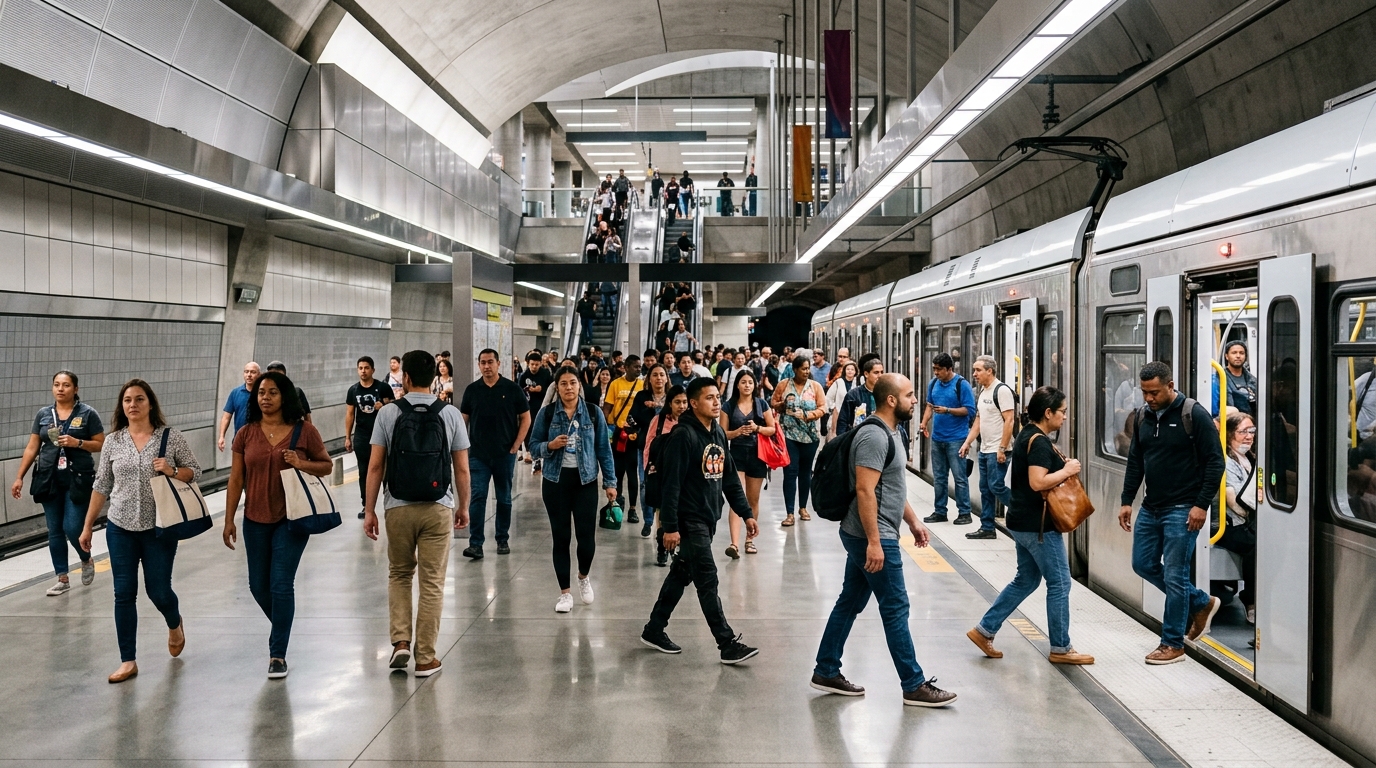
The smartest downtown strategy is to plan by zone and neighborhood, not by a long wish list. Start with the confirmed event venue and time. Next, choose one nearby meal and one optional attraction. Leave enough space for security lines, station crowds and changes to pedestrian routes. A flexible schedule will produce a better day than rushing between several reservations.
Build Your DTLA Game-Day Strategy
Use the following approach when schedules and tickets become available:
- Confirm the exact venue and hall. “Downtown” is too broad for accurate planning. South Park, Dodger Stadium and Bunker Hill require different routes.
- Choose accommodation around your highest-priority events. Staying near a rail station may be more useful than staying beside one venue.
- Group activities geographically. Pair South Park events with nearby dining, or combine Bunker Hill with the Historic Core and Little Tokyo.
- Build in a time buffer. Event security, platform crowds and temporary street controls can add time even when the train ride is short.
- Use official information on the day. Check LA28, Metro and venue alerts before leaving.
- Keep one backup plan. Save an alternative restaurant or indoor attraction in case weather, crowds or operating hours change.
Visitors should also think beyond the competition schedule. Downtown has museums, historic buildings, markets, theaters, independent restaurants and neighborhoods with distinct cultural identities. A Games visit can support local businesses when travelers move beyond the venue complex and spend time in the surrounding community.
That requires responsible planning. Avoid blocking residential entrances while taking photos, respect posted rules, tip service workers and do not treat every neighborhood as an event backdrop. Downtown is a working and residential area, not a closed theme park. The best visitors arrive prepared, remain aware of their surroundings and leave room for the city to function around them.
DTLA Life will continue updating its LA28 coverage as venue information, schedules and transportation plans develop. Future guides will include neighborhood-based itineraries, station-by-station planning, restaurant options near competition sites and realistic travel times between zones. Until then, use the confirmed venue map as the starting point and build a simple plan around it.
For your next step, browse our Downtown Los Angeles events, explore the South Park neighborhood guide and save the DTLA Weekend Guide for local ideas before or after your event.