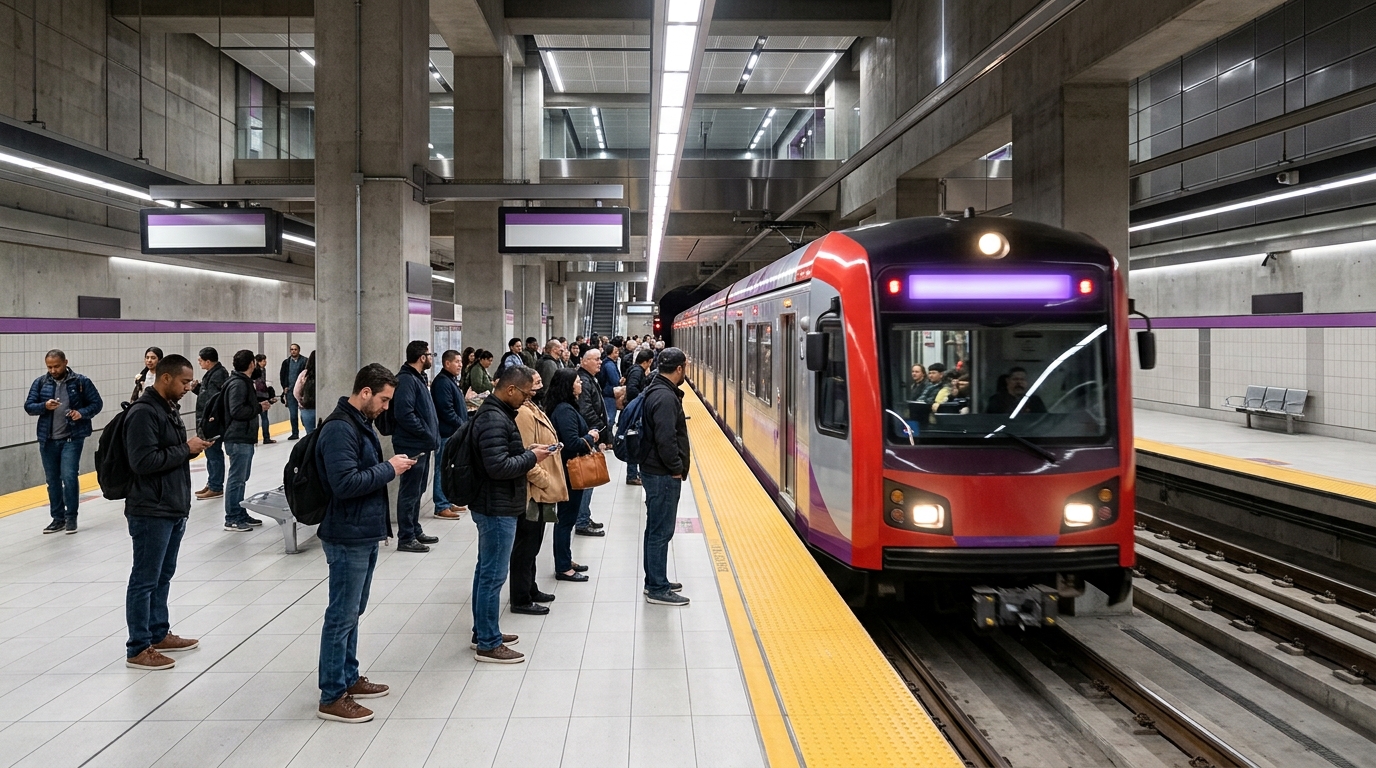
Downtown Los Angeles now has a faster rail connection to Koreatown, Miracle Mile and eastern Beverly Hills. Metro opened the first section of the D Line Subway Extension on May 8, 2026, carrying trains west from the former Wilshire/Western terminus to three new underground stations at Wilshire/La Brea, Wilshire/Fairfax and Wilshire/La Cienega.
For DTLA residents and visitors, the change makes several museums, restaurants, workplaces and neighborhoods easier to reach without driving along Wilshire Boulevard. The complete ride from Union Station to Wilshire/La Cienega takes around 21 minutes under normal service, with no transfer required when you board a westbound D Line train.
This guide explains the expanded route, fare payment, downtown transfer points and the best uses for each new station. Service can be affected by maintenance or special events, so check the official Metro Trip Planner before leaving. You can also explore our Living in DTLA guides for more practical transportation and neighborhood advice.
What Changed on the Metro D Line in 2026?
The D Line previously ended at Wilshire/Western in Koreatown. Section 1 added approximately four miles of subway service beneath Wilshire Boulevard and created a direct connection between Downtown Los Angeles and the eastern edge of Beverly Hills. The line now operates between Union Station and Wilshire/La Cienega.
From downtown, D Line trains stop at Civic Center/Grand Park, Pershing Square and 7th Street/Metro Center before continuing through Westlake and Koreatown. The B and D Lines share stations between Union Station and Wilshire/Vermont, so riders must pay attention to the train’s destination once the routes separate. Choose a train displaying the D Line and Wilshire/La Cienega when traveling toward the new stations.
Understanding the Expanded D Line Route
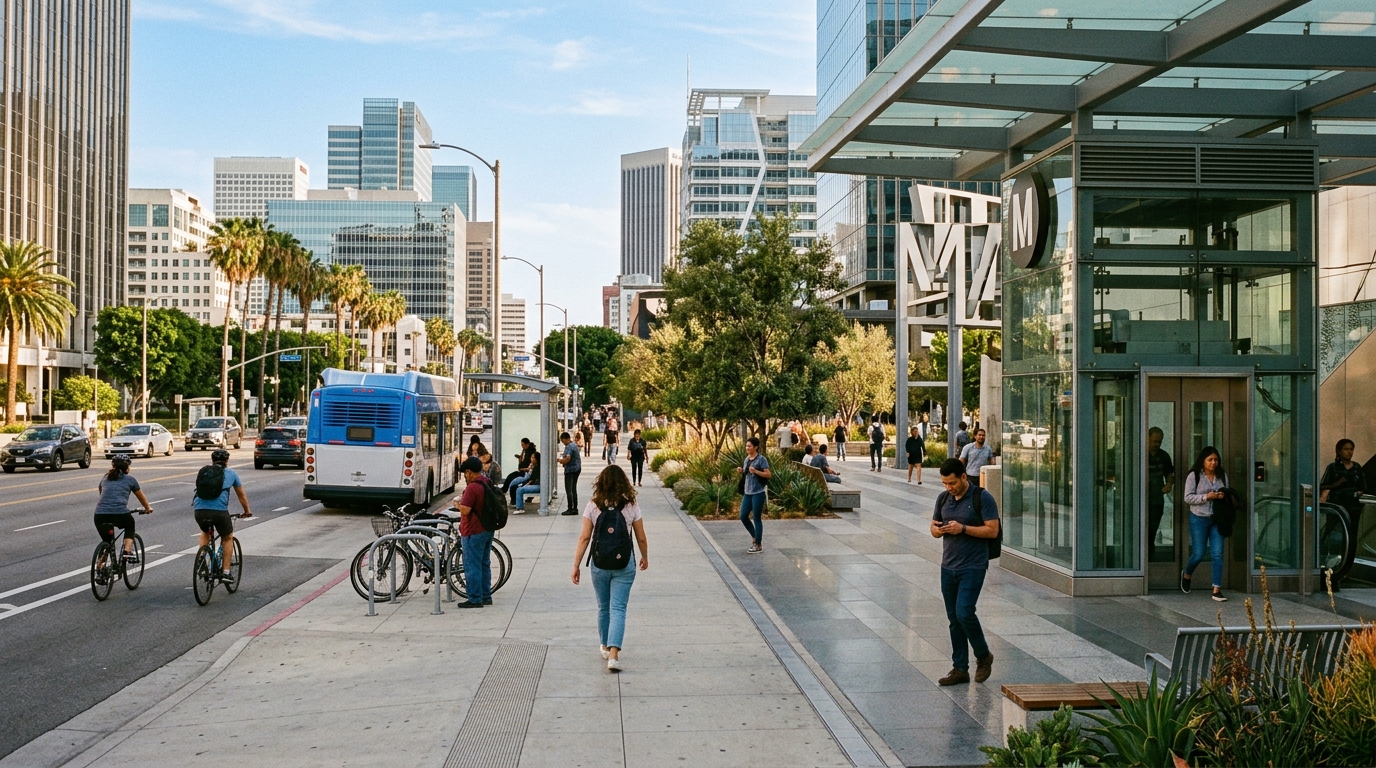
The easiest downtown starting point depends on where your trip begins. Union Station is the most useful connection for Amtrak, Metrolink and several bus routes. Civic Center/Grand Park works well for passengers near government buildings and Grand Park. Pershing Square serves the Historic Core, while 7th Street/Metro Center is the main transfer point for the A and E Lines.
If you are coming from North Hollywood on the B Line, transfer to a westbound D Line train at Wilshire/Vermont. Riders arriving on the A or E Line should usually transfer at 7th Street/Metro Center. The A and E platforms are on the upper rail level, while the B and D subway platforms are below. Follow the station signs and confirm the destination display before boarding.
Metro says the D Line generally operates from about 4:10 a.m. until about 12:30 a.m. Trains are scheduled approximately every 10 minutes through much of the day and every 20 minutes during early mornings and later evenings. Include extra time for walking through large stations, waiting for the train and finding the correct street exit.
Wilshire/La Brea: Mid-Wilshire and Local Connections
Wilshire/La Brea is the first new station after Wilshire/Western. It serves Mid-Wilshire, Park Mile and areas near Hancock Park. The station is useful for destinations around La Brea Avenue, including the El Rey Theatre and Marciano Art Foundation, as well as local businesses spread along Wilshire.
Its advantage is the north-south bus connection on La Brea Avenue. Riders can use local bus service to continue toward Hollywood or travel south toward other central Los Angeles neighborhoods. For destination ideas that can be combined with the ride, browse our things to do in Downtown Los Angeles and upcoming transit-based itinerary guides.
Wilshire/Fairfax: Museums and Miracle Mile
Wilshire/Fairfax is likely to be the most useful new stop for leisure trips from DTLA. It places riders near the Academy Museum of Motion Pictures, LACMA, the La Brea Tar Pits and Museum, Craft Contemporary and the Petersen Automotive Museum. Instead of spending time searching for parking at several nearby institutions, visitors can ride directly from downtown and explore the area on foot.
The museums have different opening days, timed-entry requirements and renovation conditions. Confirm each institution’s current schedule before creating a multi-museum itinerary. A realistic visit usually includes one major museum, one smaller attraction and a meal rather than trying to rush through every venue in one afternoon.
For a stronger city day, begin with breakfast in DTLA, take the D Line to Wilshire/Fairfax, visit one or two attractions and return downtown for dinner. Our DTLA food and drink guides can help you choose a restaurant near your starting or ending station.
Wilshire/La Cienega: Eastern Beverly Hills and Restaurant Row
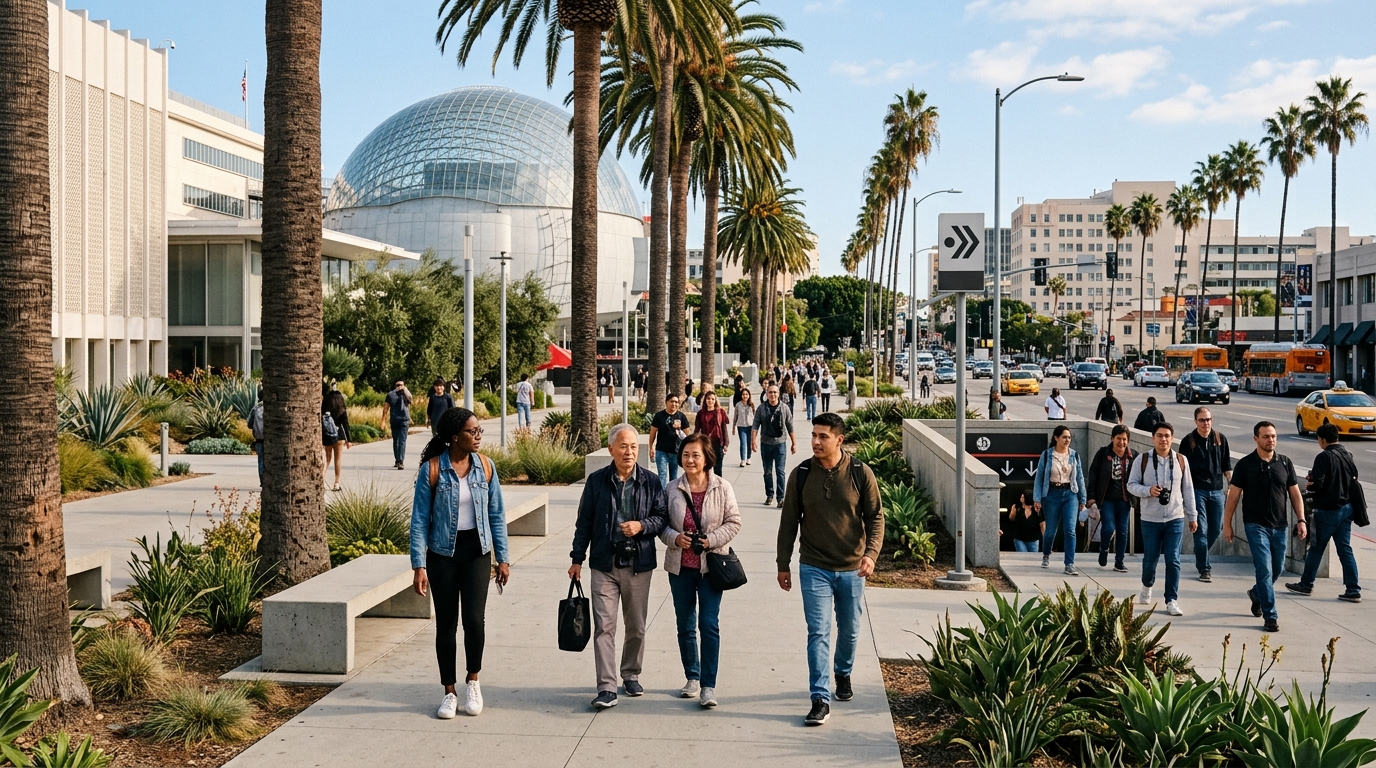
Wilshire/La Cienega is the current western terminus. It serves eastern Beverly Hills, Beverly Grove and businesses near La Cienega Boulevard. The station is close to the area commonly known as Restaurant Row and provides bus connections north toward West Hollywood and south toward other parts of Los Angeles.
Do not assume every Beverly Hills or West Hollywood destination is a short walk from the station. Some trips still require a bus connection. Enter the exact destination into a trip planner instead of searching only for “Beverly Hills.” This final station is most valuable as both a destination and a transfer point for places beyond the immediate intersection.
Metro Fares, TAP Cards and Contactless Payment
A regular Metro ride currently costs $1.75. Riders receive free Metro bus and rail transfers for two hours after the first tap when using an eligible TAP card, credit card or debit card. Metro also applies fare caps, meaning a regular rider should not pay more than $5 in one day or $18 over seven days when consistently using the same eligible payment method.
You can pay with a physical TAP card, a digital TAP card, or a contactless physical or digital credit or debit card. Tap at the fare gate or validator before entering the platform. Use the same card or device for the entire trip so the system can recognize transfers and calculate fare caps correctly.
Transfers and Fare Caps Without Confusion
A transfer does not mean you can skip tapping. Tap again whenever the system instructs you to enter another paid area or board a connecting bus. The system determines whether the second tap falls within the free-transfer window. Avoid switching between a phone, smartwatch, physical bank card and TAP card during the same journey because they may be treated as separate payment methods.
Traveling in a group requires extra attention. Each person can use an individual TAP or payment card, which is the simplest option. Metro’s contactless system can also support payment for additional riders under specified conditions, but the group must remain together and follow the same journey. Check the current Metro fare and payment rules before relying on one card for several people.
How to Plan a Practical D Line Day from DTLA
The D Line is most useful when you plan around stations instead of building a scattered list of attractions. Choose one downtown starting area, one destination station and one or two nearby activities. That approach reduces unnecessary backtracking and makes the train’s time advantage meaningful.
Before leaving, check live service alerts, attraction hours and the walking route from the station exit. Save the return journey on your phone, especially if your trip will end late. Stations can have multiple entrances, and the entrance used on arrival may not be the most convenient one for the return trip.
A Sample Car-Free Day from Downtown Los Angeles
Start near Pershing Square or 7th Street/Metro Center with coffee or an early meal in the Historic Core. Board a westbound D Line train marked for Wilshire/La Cienega. Exit at Wilshire/Fairfax for the museum district, then choose one main institution and leave time to walk around the surrounding public spaces.
After the museum, either eat near Miracle Mile or continue one stop to Wilshire/La Cienega for an early dinner. Return to DTLA on an eastbound train toward Union Station. Depending on the evening, finish with a downtown event, rooftop stop or neighborhood walk. Check our DTLA Weekend Guide for timely ideas and our LA28 Downtown Los Angeles guide for how Metro will support larger future events.
Keep the plan flexible. A delayed entry, long meal or station wait can quickly make an overpacked itinerary frustrating. The point of the new subway is not to squeeze the maximum number of stops into one day. It is to make a cross-city outing more predictable and reduce the time spent driving, parking and moving a car between destinations.
As later sections open, the D Line is expected to extend farther through Beverly Hills, Century City and Westwood. For now, the 2026 extension already changes how people can connect Downtown Los Angeles with Mid-Wilshire. Use the official schedule, tap with one consistent payment method and organize the day around one station area. That is the simplest way to make the new D Line work for you.