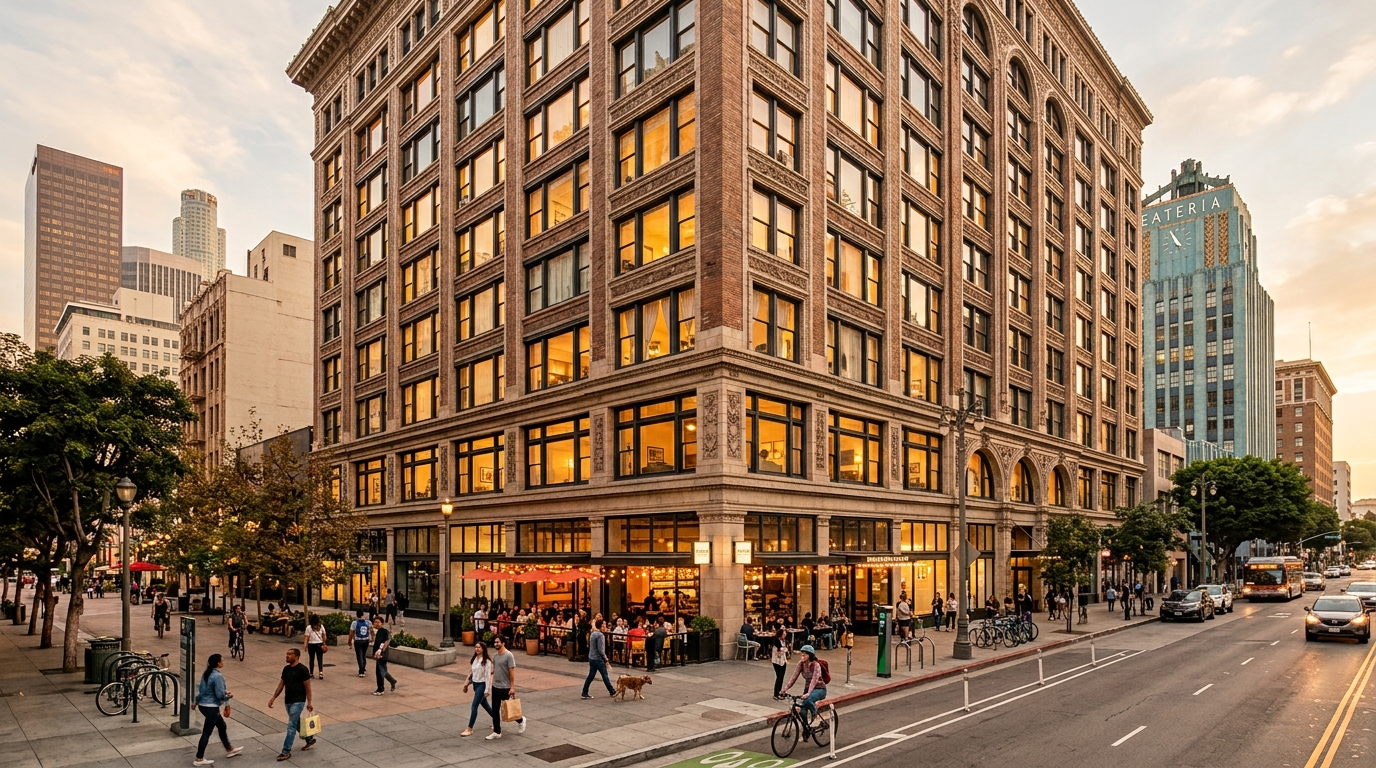
Downtown Los Angeles has hundreds of buildings created for an earlier version of city life. Some were designed as offices, department stores, banks, warehouses or hotels long before remote work and today’s housing shortage reshaped demand. Adaptive reuse offers one possible answer: keep the existing structure, change its primary use and give it a new economic life.
The idea is not new in DTLA. Los Angeles adopted its original Adaptive Reuse Ordinance in 1999, helping convert older commercial buildings into apartments, lofts and hotels. In February 2026, a new citywide ordinance took effect, expanding similar incentives across Los Angeles.
For residents, adaptive reuse can mean more homes, restored architecture and additional street activity. It is not, however, a process in which every empty office tower automatically becomes an apartment building. Layout, zoning, historic status and financial feasibility still matter. This guide explains the 2026 policy change and what readers should watch as proposals move forward.
Why Adaptive Reuse Is Back in Focus Across Los Angeles
Los Angeles is facing two visible problems at once: a serious need for more housing and underused commercial space in parts of the city. Adaptive reuse tries to connect those problems by making it easier to convert qualifying buildings instead of requiring every new home to begin with demolition and ground-up construction.
The Los Angeles City Council adopted Ordinance No. 188,793 in late 2025, and the Citywide Adaptive Reuse Ordinance became effective on February 1, 2026. According to Los Angeles City Planning, the ordinance establishes zoning incentives and streamlined procedures for commercial-to-residential conversions that create at least five housing units.
That does not mean the same rule applies identically to every parcel. Downtown Los Angeles is governed through the newer Chapter 1A zoning framework and its Downtown Adaptive Reuse Program, while eligible properties outside the Downtown Community Plan Area may use citywide provisions tied to their zoning and location.
What Changed Under the 2026 Ordinance?
The original program generally focused on older buildings in and around Downtown Los Angeles, with later expansion into several smaller areas. The updated policy makes many more buildings eligible. In qualifying zones, existing buildings that are at least 15 years old may be considered for conversion. Certain parking structures or parking areas within existing buildings may qualify after five years, while some younger buildings may require additional review.
The policy is intended to remove zoning barriers that can make conversions impractical. Many qualifying projects may proceed directly to the Los Angeles Department of Building and Safety for permits rather than requiring a longer discretionary process. Historic properties, projects requesting exceptions and certain other conversions may still require additional review.
Citywide Rules and Downtown Rules Are Related but Different
The 2026 ordinance is often described as an expansion of the adaptive reuse model pioneered in DTLA. That is accurate, but downtown properties do not simply follow the same Chapter 1 rules used everywhere else. Los Angeles City Planning identifies a separate Downtown Adaptive Reuse Program under Section 9.4.5 of the new zoning code for eligible projects inside the Downtown Community Plan Area.
This distinction matters when following a proposed conversion. A headline saying a building is “eligible for adaptive reuse” does not confirm that the project is approved, financially feasible or ready for construction. The correct rules depend on the parcel, zoning district, existing use, building age and historic status.
New Flexibility Can Help Difficult Buildings Work
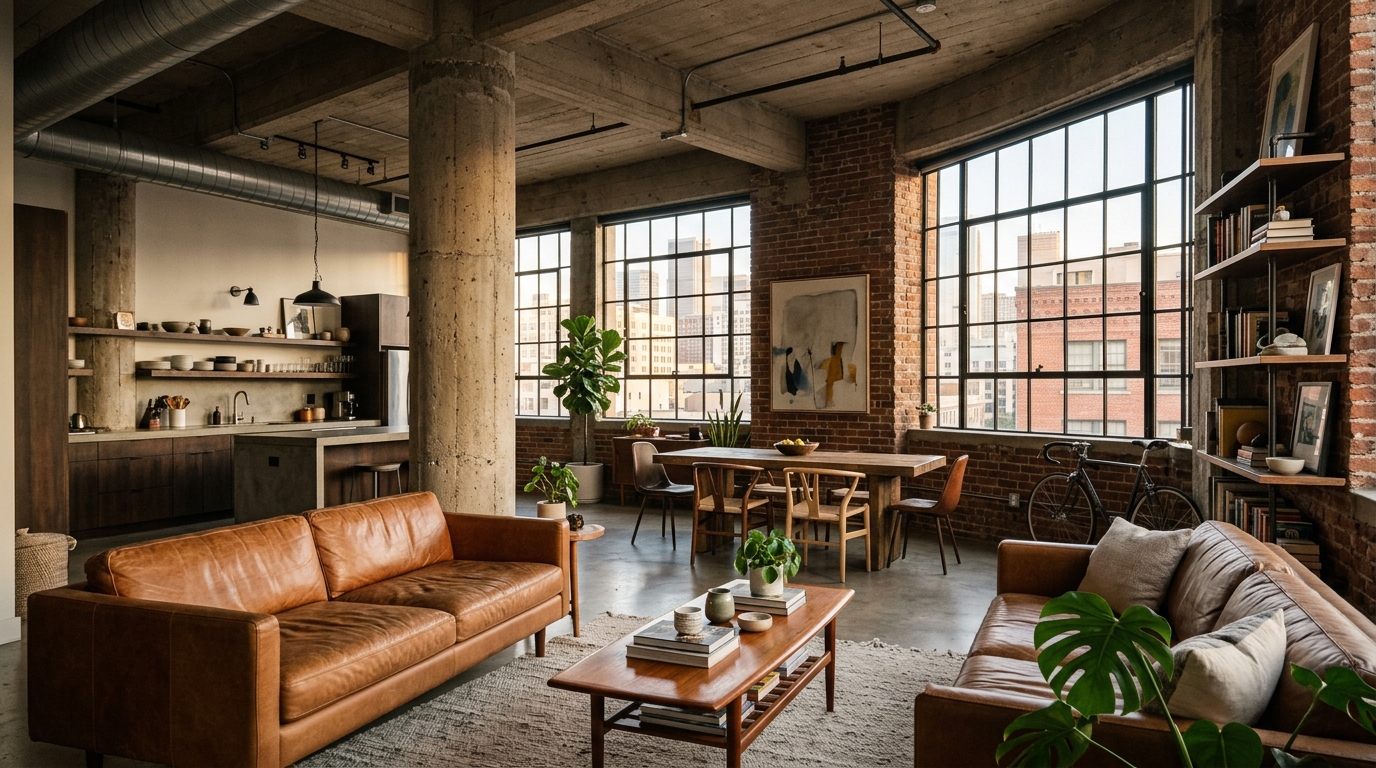
The ordinance adds flexibility for rearranging interior space and creating the light, air and shared areas required for residential use. It may allow new floor levels, replacement floor area where parts of a building are removed for courtyards or light wells, and a rooftop story for shared amenities or open space.
Some unified adaptive reuse projects that provide affordable housing may receive added incentives, including additional residential floors or greater density in a new-construction portion of the project. Minimum unit-size requirements under zoning were also removed, although apartments must still satisfy applicable building and safety standards.
These incentives can improve the odds for a challenging property, but they do not eliminate construction costs. Developers may still need major upgrades involving plumbing, electrical systems, elevators, seismic performance, fire protection, ventilation, accessibility and residential windows. A building that looks ideal from the sidewalk can remain difficult to convert once its internal structure is studied.
Why Downtown Los Angeles Has a Head Start
DTLA has already spent more than two decades testing adaptive reuse at neighborhood scale. Los Angeles City Planning says the original downtown program enabled more than 12,000 housing units while preserving and reactivating older structures. That history is visible in the Historic Core, where former offices and commercial buildings now contain lofts, apartments, hotels, restaurants and ground-floor businesses.
The policy helped change downtown from a daytime employment center into a place with a larger residential population. It also showed that historic buildings can support modern uses without erasing their original design. Decorative façades, old lobbies, exposed columns and oversized windows often became defining features.
The Historic Core Shows Both the Potential and the Limits
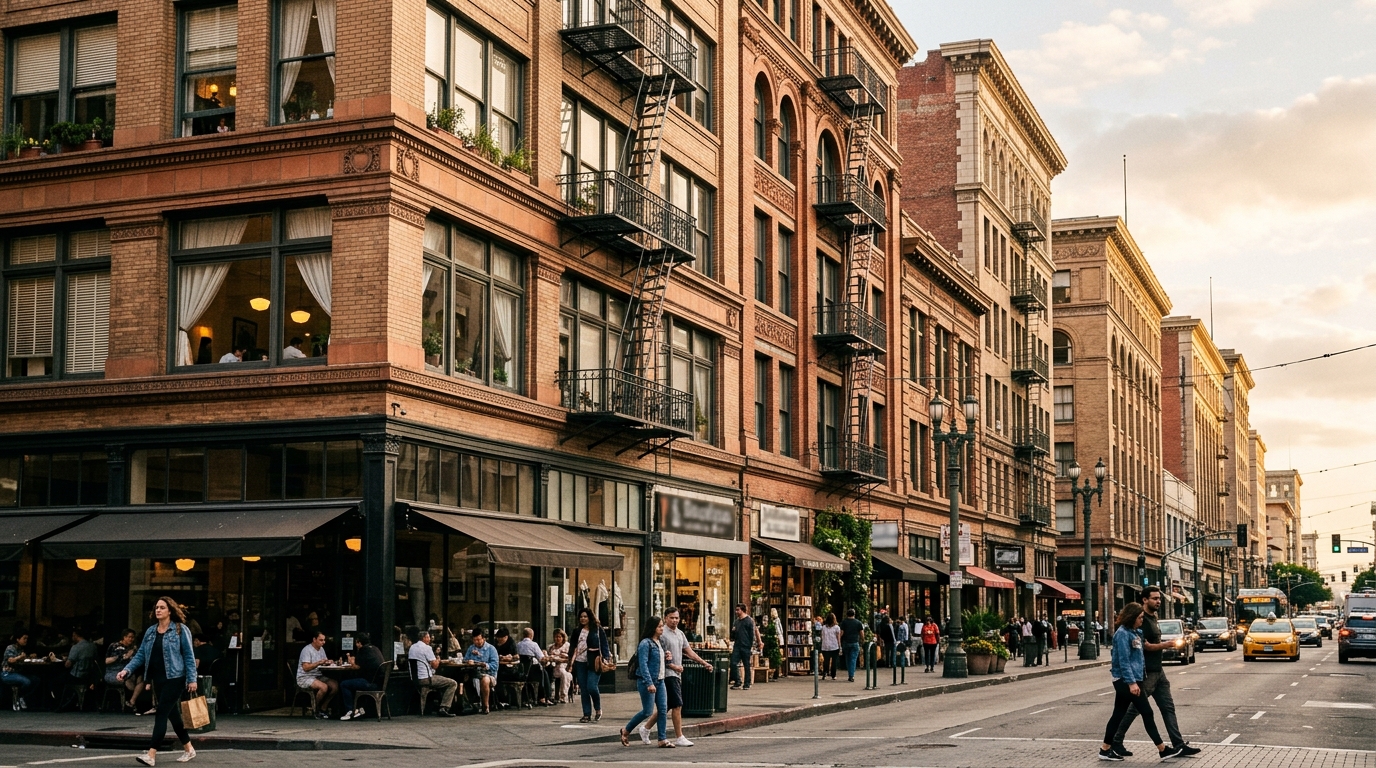
The Historic Core contains some of DTLA’s clearest adaptive reuse examples. Its older office buildings often have narrower floor plates and operable windows that can make residential conversion more practical than in a deep, sealed modern office tower. Reusing them can also support preservation by giving owners a revenue-producing reason to maintain the structure.
Historic status adds responsibility as well as character. Changes to designated resources may need review, and rehabilitation should protect important architectural features. The National Park Service standards for rehabilitation provide a widely used framework for managing alterations to significant properties.
Readers interested in DTLA architecture can browse our Arts and Culture guides and things to do in Downtown Los Angeles. Many historic interiors and façades make more sense when viewed as part of downtown’s long cycle of construction and reinvention.
What More Adaptive Reuse Could Mean for DTLA Residents
More conversions could help downtown add residents without waiting for every vacant parcel to become a new tower. Additional housing can bring customers to restaurants, grocery stores, cafés and services outside traditional office hours. Occupied upper floors can also create more consistent activity on blocks that currently feel empty after workers leave.
Adaptive reuse can have environmental advantages because it retains much of a building’s existing structural material. Reusing the frame may avoid some demolition waste and embodied carbon associated with replacing a structure. The result still depends on the renovation, energy systems and long-term performance of the completed building, so “reuse” should not automatically be treated as proof of sustainability.
Location is another advantage. Many downtown commercial buildings are already close to Metro stations, bus routes, jobs and cultural institutions. That supports a less car-dependent lifestyle when the surrounding sidewalks, lighting and local services also function well. Our guide to the Metro D Line from DTLA explains how downtown rail connections are expanding.
Opportunities, Trade-Offs and Questions to Watch
The biggest question is not whether adaptive reuse can produce housing. DTLA has already shown that it can. The harder question is what kind of housing will be created, how quickly projects can secure financing and whether new residents will find complete, functional neighborhoods around those buildings.
Market-rate units can add supply, but they may not help lower-income households without affordability requirements or public incentives. Small apartments can work for some residents, but design should still provide adequate light, ventilation and shared space. A converted building with inactive walls may add residents without improving the pedestrian experience.
What to Check Before Calling a Conversion a Success
When a DTLA adaptive reuse project is announced, look beyond the rendering. Confirm whether the proposal has filed for permits, whether financing is secured and whether construction has started. Check the number and size of units, the affordable-housing commitment, treatment of historic features and plan for ground-floor space.
Residents should also watch how the project connects to the block. Does it improve entrances, lighting and sidewalks? Are there practical bicycle facilities and transit connections? Will existing local businesses remain, or will the renovation leave retail space empty for years?
Adaptive reuse is a tool, not a complete downtown recovery plan. Housing conversions must work alongside public safety, sanitation, transit, parks, grocery access and support for independent businesses. Downtown will not become more livable simply because office floors are renamed apartments. The surrounding neighborhood must work at street level.
Still, DTLA is well positioned to show what thoughtful reuse can achieve. It has a large inventory of older buildings, established transit, historic character and direct experience converting commercial space into homes. The 2026 policy change gives the rest of Los Angeles more access to a model downtown has been developing since 1999.
Follow our Living in DTLA section for future housing updates, explore the DTLA neighborhood guides, and read our LA28 Downtown Los Angeles guide to understand another major force shaping downtown investment and mobility.