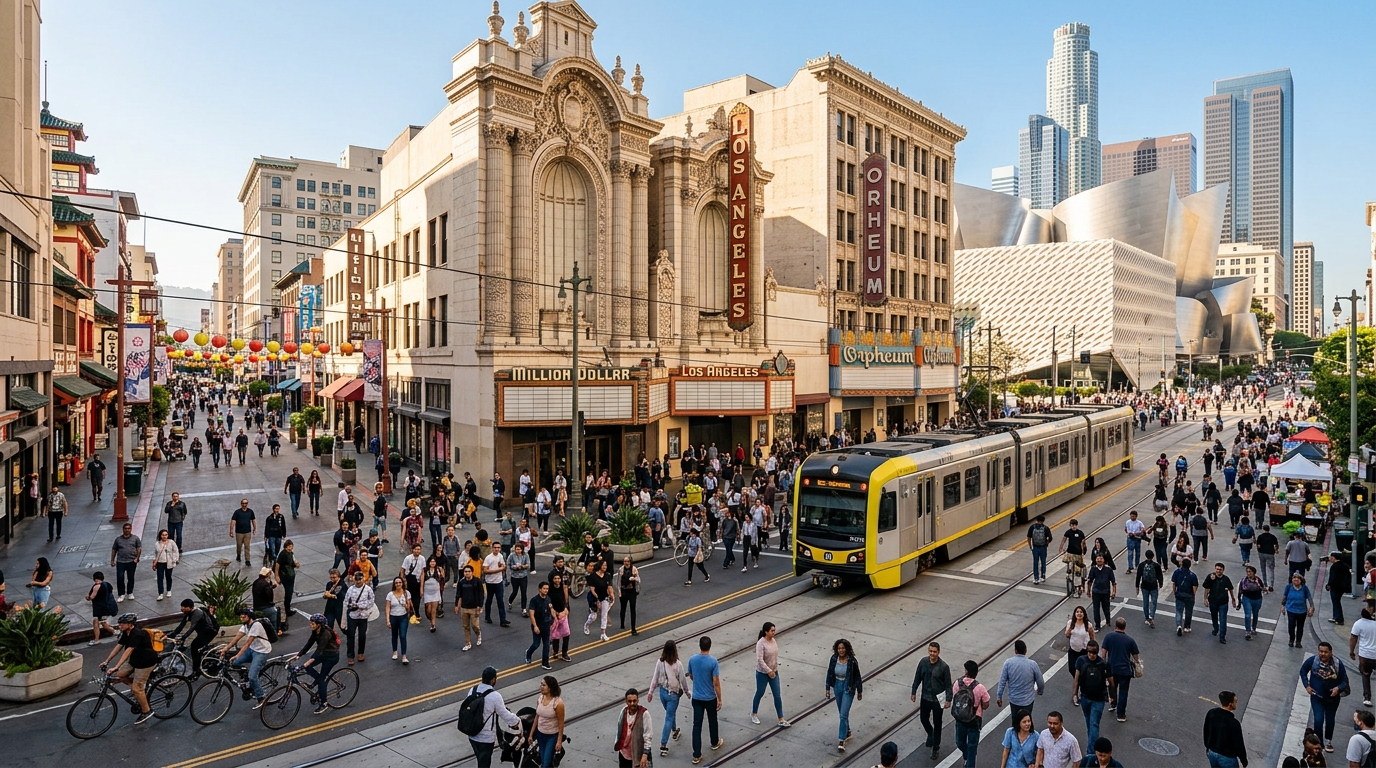
Downtown Los Angeles is easier to explore when the day is organized around its rail stations instead of a long list of attractions. The Regional Connector links three of DTLA’s most interesting districts through the Little Tokyo/Arts District, Historic Broadway and Grand Avenue Arts/Bunker Hill stations. The A and E Lines serve all three, allowing visitors to ride between neighborhoods and spend their energy walking where the streets are most rewarding.
This route is designed for a flexible half-day or full-day outing. It begins with Japanese American history and local businesses in Little Tokyo, moves through Historic Broadway, and finishes among the museums and performing arts institutions of Bunker Hill. Starting in Little Tokyo creates a natural progression from a morning meal toward an afternoon museum visit or evening event.
Metro schedules, station access and attraction hours can change, so check the official Regional Connector information and Metro Trip Planner before leaving. For more transit basics, read our Metro D Line guide from DTLA.
Why the Regional Connector Works for a DTLA Day
The Regional Connector is a 1.9-mile underground rail connection that opened in 2023. It added the three stations used in this itinerary and created the current A and E Line service pattern through downtown, reducing transfers between several rail corridors.
Each station places you inside a distinct neighborhood. Instead of walking the full distance between Little Tokyo and Bunker Hill or paying for multiple rideshares, take a short rail trip and explore several blocks around each stop. This is especially useful during hot weather or for visitors with limited walking endurance.
Metro’s regular fare is currently $1.75, and transfers are free within two hours when riders tap with an eligible payment method. Daily and seven-day fare caps may reduce the cost for people taking several trips. Use the same TAP card, contactless bank card or digital wallet throughout the day so the system can recognize transfers and calculate caps correctly.
Start at Little Tokyo/Arts District Station
Little Tokyo/Arts District Station sits near First Street and Central Avenue, placing riders between two neighborhoods with different personalities. The west side leads into Little Tokyo’s cultural institutions, restaurants and longtime businesses. Crossing east toward the Los Angeles River brings you into the Arts District, where converted industrial buildings contain galleries, cafés and newer restaurants.
For this itinerary, stay on the Little Tokyo side first. The neighborhood is compact enough for a focused walk, but it deserves more respect than a quick food stop. Little Tokyo was established in the nineteenth century and remains one of the country’s most significant Japanese American districts. Its history includes forced removal and incarceration during World War II, redevelopment pressure and continued community efforts to preserve cultural identity.
Explore the Cultural Core Before Choosing a Meal
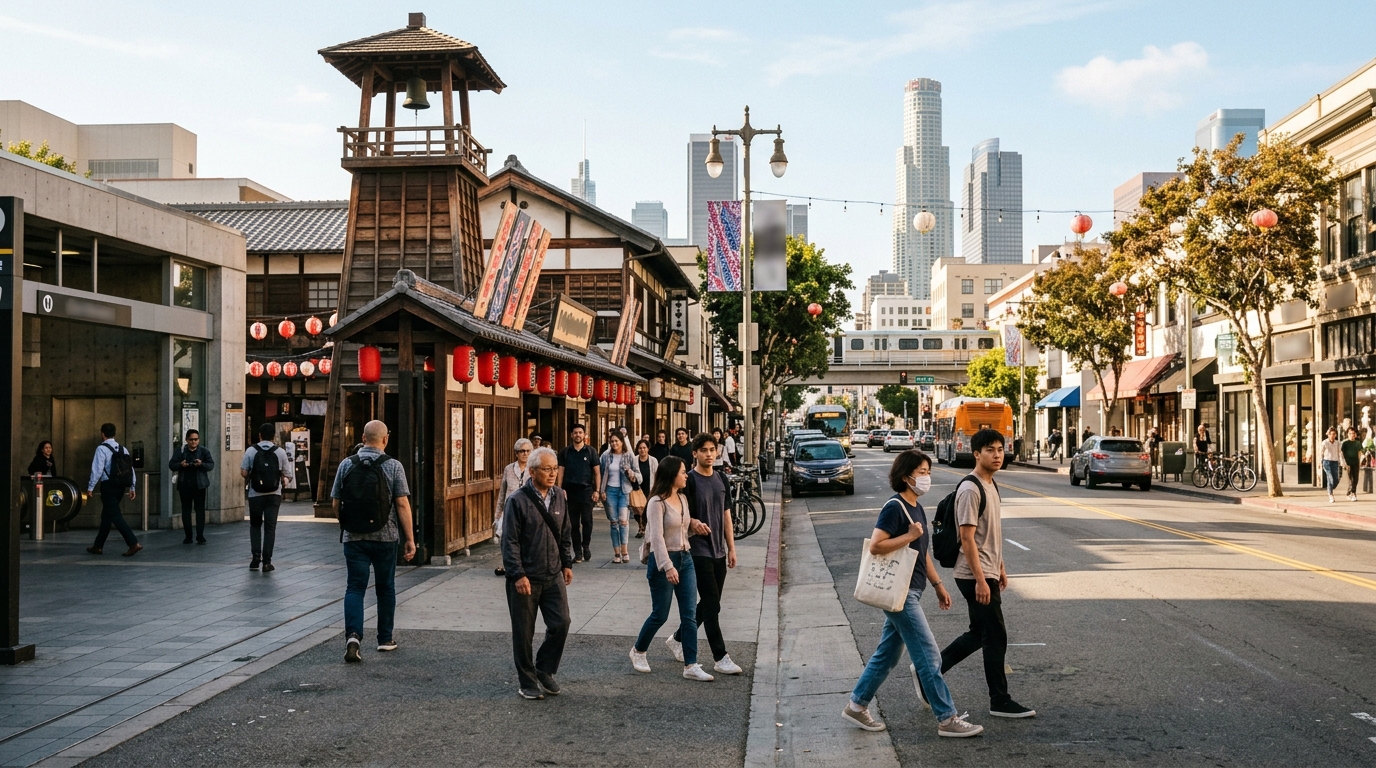
From the station plaza, walk toward the Japanese American National Museum campus, the Go For Broke Monument and the Japanese American Cultural and Community Center area. As of summer 2026, the main JANM Pavilion is closed for renovation and is expected to reopen later in the year. Programs may continue in other campus spaces, so confirm the current situation through the official JANM website rather than building the entire visit around gallery access.
Continue through the historic commercial blocks around First Street and Japanese Village Plaza. This is a good point to choose one local meal, bakery stop or small purchase. Avoid treating the district as a collection of photo backgrounds. Support established businesses, respect memorials and community spaces, and remember that people live and work here.
If you have more time, cross Alameda Street into the Arts District for a short extension. Keep the detour limited unless the Arts District is your main destination because its attractions are more spread out. Our Little Tokyo guide and new DTLA restaurant guide can help you select a focused stop.
Ride Instead of Walking the Entire Way to Broadway
It is possible to walk from Little Tokyo to Historic Broadway, but taking the train keeps the route comfortable and saves energy for the architecture ahead. Return to Little Tokyo/Arts District Station and board either an A or E Line train traveling west through downtown. Historic Broadway is the next station.
Check the platform display rather than relying only on line color, and tap again where required. If the group prefers to walk, use First or Second Street and pay attention at large intersections. The direct distance is manageable for many visitors, but the rail segment is the feature that makes this itinerary adaptable for different ages and mobility levels.
Continue at Historic Broadway Station
Historic Broadway Station exits near Second Street and Broadway. Metro describes the surrounding area as containing two nationally registered districts: the Broadway Theater District and Old Spring Street, downtown’s original financial district. The theater district includes 12 original theaters within seven blocks, giving this portion of the route one of the strongest concentrations of historic entertainment architecture in the country.
Begin by looking south along Broadway, where elaborate theater façades reveal the street’s former importance as a major cinema and shopping destination. Some buildings operate as active venues, while others are visible mainly from the exterior. Do not assume a lobby is publicly accessible simply because a building appears open.
Connect the Theaters, Bradbury Building and Grand Central Market
Walk toward Third Street to see more of the Broadway corridor, then move toward the Bradbury Building at Broadway and Third. Its exterior is understated compared with its famous interior court. Public lobby access can be restricted by operating conditions, filming or private use, so treat an interior view as a bonus rather than a guarantee.
Grand Central Market sits across Broadway and works well as the route’s main food break if you did not eat in Little Tokyo. The market can become crowded at lunch and on weekends. Walk through first, compare choices and order from one or two vendors rather than trying to sample everything. The surrounding blocks also provide access to Angels Flight, Pershing Square and the Historic Core’s older commercial streets.
This section can easily grow into a separate half-day. Stay focused if you have a museum reservation on Bunker Hill. Save our Historic Core guide and free and affordable DTLA activities guide for a longer return visit.
Finish with Art and Architecture on Bunker Hill
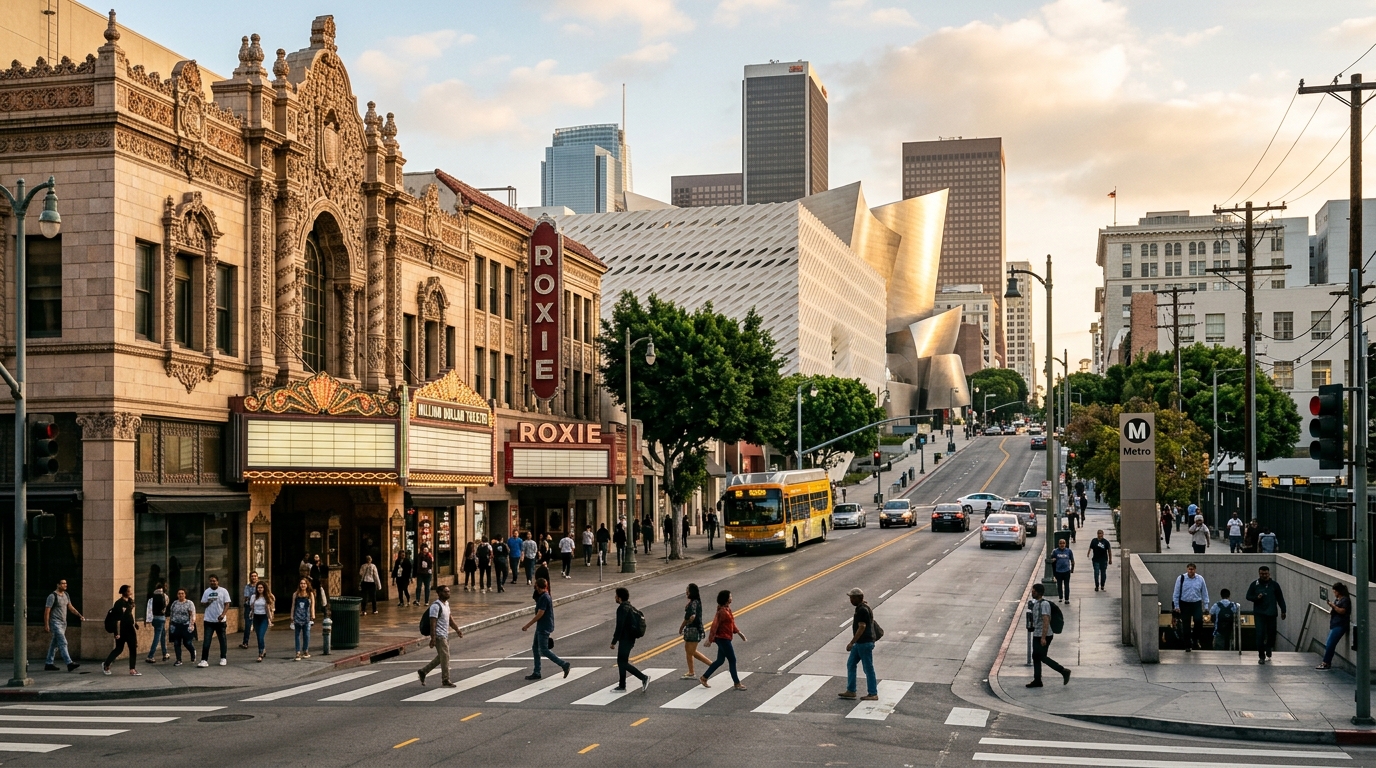
Return to Historic Broadway Station and take the A or E Line one stop to Grand Avenue Arts/Bunker Hill. The station is deep below street level, so allow time for escalators or elevators before a reservation. The Hope Street entrance places riders near The Broad, MOCA, Walt Disney Concert Hall and The Music Center.
You can also walk uphill from Historic Broadway, use Angels Flight when operating or take a local bus, but the station-to-station ride is the most direct continuation of this itinerary. The elevation change is meaningful, particularly on a warm afternoon.
Build the Bunker Hill Finish Around One Main Attraction
Bunker Hill contains enough cultural institutions to fill several days. Trying to visit every museum and performance venue in one afternoon usually produces a rushed experience. Choose one main attraction, then use the surrounding architecture and public spaces as flexible additions.
Choose a Museum, Architecture Walk or Evening Performance
The Broad is the easiest budget anchor because general admission to its collection galleries is free, although advance timed tickets are recommended and some exhibitions cost extra. Confirm tickets and current hours through the official Broad visitor page. MOCA’s Grand Avenue location is directly across the street, while Walt Disney Concert Hall and The Music Center are a short walk north.
Travelers without a museum reservation can still build a strong architecture walk around Grand Avenue, the concert hall exterior, California Plaza and views toward City Hall. For an evening finish, check current performances or free public programs and leave enough time for venue security. Our DTLA events page, Weekend Guide and LA28 Downtown Los Angeles guide can help connect this route to a scheduled event.
Plan at least four hours for the basic route and six to eight hours when adding a full museum visit or sit-down meal. Wear supportive shoes, carry water, and keep valuables secure without becoming distracted from the neighborhood. Save the exact station entrances on your phone, because downtown rail stations may have exits on different blocks or elevations.
The strength of this itinerary is not the number of landmarks checked off. It is the ability to experience three different versions of Downtown Los Angeles in one connected day: a living Japanese American neighborhood, a historic theater and commercial district, and a hilltop arts corridor. Use Metro for the longer or steeper transitions, then slow down and explore each neighborhood on foot.